
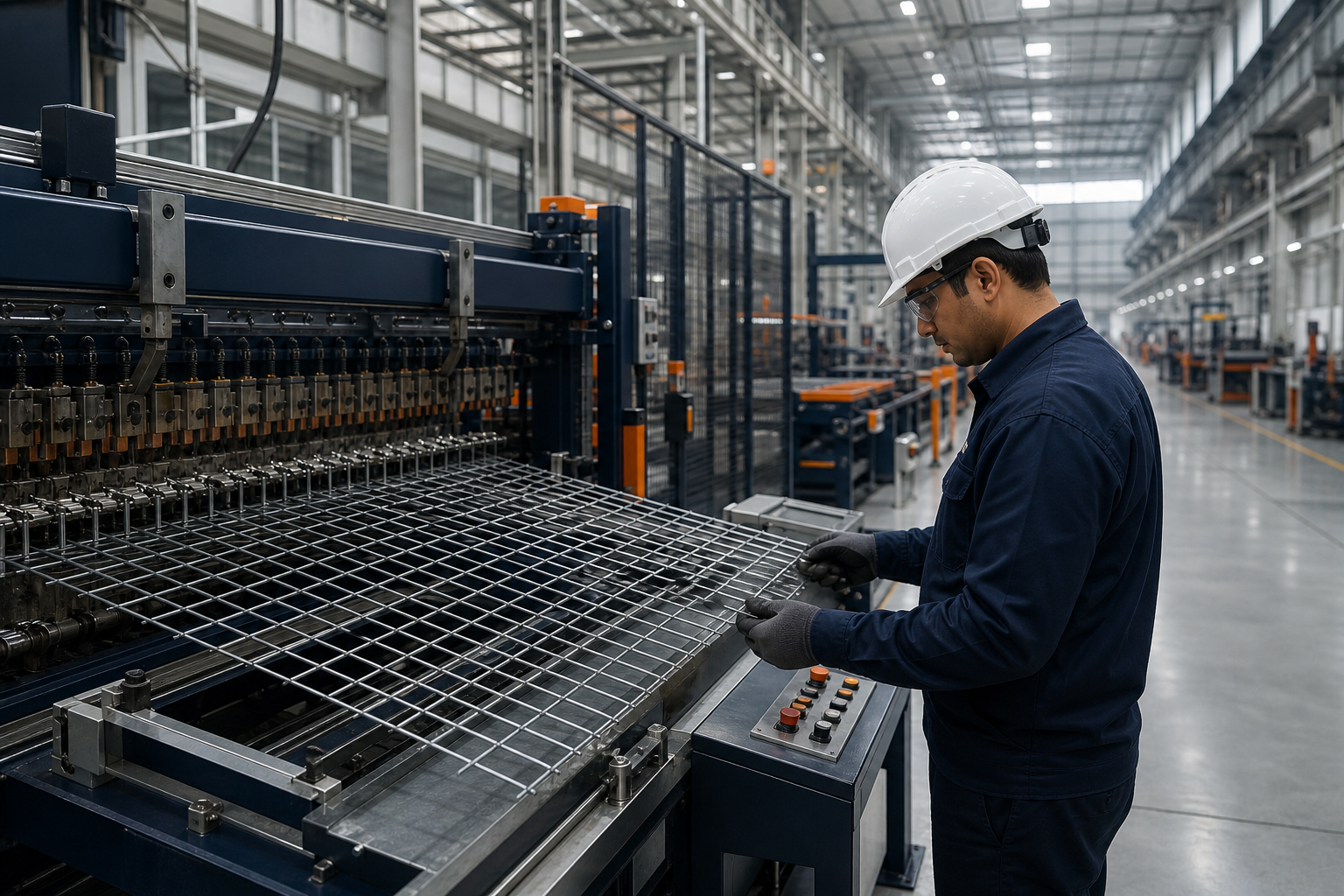
Infrastructure
Capability,
connected by design.
Infrastructure is more than machines. It is the flow, tooling, inspection, utilities, people, safety, storage, and information that allow production to stay controlled.
Explore the systemOur infrastructure position
The value is not in isolated equipment. It is in connected control.
A capable production environment makes status, movement, handoffs, maintenance, quality, and project identity easier to understand. That connection is what turns equipment into dependable infrastructure.
Capability map
Follow the product through the facility.
Explore how seven infrastructure zones support controlled flow from incoming material to dispatch.
Interactive facility logic
Select a node to see the role it plays in controlled product flow.
Material control
Inputs begin with visible status
Receiving, identification, review, and controlled staging establish what material may enter production and what project context must travel with it.
Receiving and identification
Incoming review
Controlled storage
Production staging
Production environment
Infrastructure that supports the process—not interrupts it.
Process-led layout
Arrange work around production families, movement, checks, and safe access.
Setup readiness
Support tooling, changeover, first-piece review, and controlled adjustment.
Quality proximity
Position inspection resources close enough to influence the production decision.
Visible status
Separate incoming, in-process, hold, released, and dispatch-ready material.
Flow before scale
A clear route for material, people, status, and information.
Scalable by logic
Growth should extend control, not dilute it.
Scalable infrastructure begins with modular process thinking: defined cells, repeatable interfaces, flexible staging, maintainable utilities, and inspection capacity that grows with production demand.
- Modular production and support zones
- Utilities planned around safe access and maintenance
- Storage aligned with status and project sequence
- Quality resources considered alongside output demand
The infrastructure beneath output
Systems that keep systems running.
Maintenance
Planned care, accessible equipment, spares logic, and visible service status.
Calibration context
Measurement resources maintained and selected for the characteristic being checked.
Safety
Movement, guarding, handling, access, and task controls designed into the environment.
Utilities
Power, lighting, ventilation, lifting, and support services aligned with process needs.
Material handling
Suitable movement and storage methods that protect product condition and people.
Dispatch readiness
Packaging, loading, identity, documentation, and shipment sequence connected.
People and environment
A capable facility must support the people inside it.
Infrastructure decisions influence safety, clarity, physical effort, skill development, resource use, and the ability to improve.
Safer work
Clear movement, task access, guarding, lifting, and housekeeping expectations.
Skilled decisions
Workstations and information that help people understand setup, status, and checks.
Resource awareness
Material yield, energy, consumables, waste separation, and durable equipment choices.
Continuous improvement
Layouts and information paths that make recurring issues easier to see and address.
Evidence before claims
Capability should be demonstrated against the project.
Machine lists and capacity figures become meaningful only when connected to the required product, tolerance, quantity, release plan, and evidence.
Product fit
Can the equipment, tooling, material path, and checks support the required configuration?
Volume fit
Can planning, production, inspection, storage, and dispatch support the agreed release sequence?
Evidence fit
Can the required submittals, inspection records, identification, and release documents be produced?
Verified facility dimensions, machine inventory, installed capacity, output rates, and utility data should be added only from approved Corvex records.
Match capability to the requirement
Bring the product, volume, and release plan.
A technical review can connect the desired configuration to tooling, process flow, inspection, packaging, and project timing.