
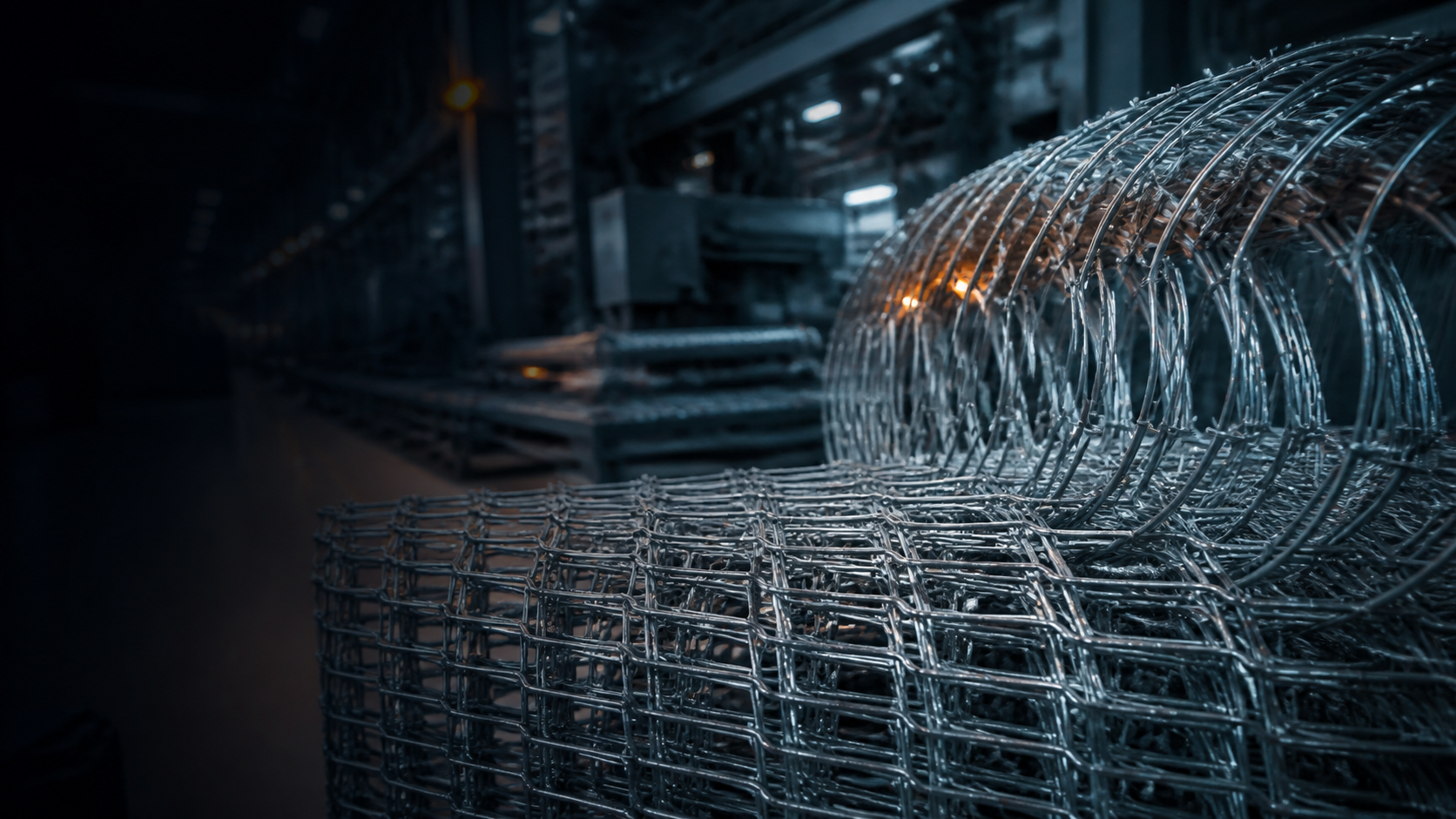
Precision at the perimeter
Protection,
engineered in.
Purpose-built fencing and barrier systems shaped around site risk, operating conditions, and the realities of project delivery.
One perimeter. Many interfaces.
Security systems work best when every component works as one.
Corvex approaches the perimeter as an engineered assembly—from material and barrier geometry to support structures, site interfaces, documentation, and dispatch sequencing.
That gives project teams a clearer path from an operating need to a system that can be specified, procured, installed, and maintained with confidence.
The Corvex standard
Confidence is designed into the process.
Four principles connect the factory floor to dependable project outcomes.
Specification first
System choices begin with operating needs, exposure, and the project standard.
Controlled production
Defined inputs and production stages support consistent, repeatable output.
Quality evidence
Inspection points are planned around the characteristics that matter to the scope.
Project readiness
Packaging, documentation, accessories, and logistics are considered as one delivery.
System portfolio
Start with the protection layer.
Navigate the portfolio by system role, then refine material, geometry, finish, and supporting components.
View all productsFeatured configurations
Technical clarity at a glance.
A product interface designed to make variant, application, and supporting information easier to compare.
Concertina barrier system
HelixGuard C-Series
Configurable coil geometry · Galvanized or stainless options
View configurationIndustrial mesh fencing
GridLock M-Series
Multiple aperture profiles · Project-ready panels
View configurationStructural support system
VectorPost Y-Series
Engineered angle profiles · Accessory-compatible
View configurationFrom brief to boundary
A visible, controlled manufacturing journey.
Explore each stage to see how project information becomes a production-ready system.
See our processActive stage
Project intelligence
We map the site, operating conditions, interface points, and project constraints.
Industry context
Engineered for where it operates.
Different sites create different risk, access, exposure, and continuity demands. The system should reflect them.
Explore industries
Infrastructure
Capability you can see. Control you can trace.
Production cells, inspection routines, material handling, and dispatch planning are connected around one objective: deliver the agreed system clearly and consistently.
01Dedicated forming and mesh workflows
02Inspection integrated with production
Quality, made visible
Release decisions backed by evidence.
Material identity
Confirm inputs against the agreed material and finish.
Dimensional control
Check geometry and critical dimensions through production.
Finish integrity
Review coating, surface condition, and fabrication quality.
Dispatch release
Verify configuration, quantity, packaging, and documentation.
Designed as one system
A focused model for accountable delivery.
These figures describe our working model—not unverified capacity or customer claims.
0
Quality gates across the production journey
0
Core system families configured around site needs
0
Industrial environments supported by our portfolio
0
Accountable partner from specification to dispatch
Capability evolution
Build discipline. Add intelligence.
Our roadmap keeps the fundamentals visible while evolving the perimeter as a connected, lifecycle-aware system.
Materials discipline
Build every system on controlled inputs and clear specification.
A useful project partner
What good collaboration should feel like.
“Clear enough to specify. Controlled enough to trust. Practical enough to deliver.”
The operating standard we set for every project conversation
Responsive technical review
Transparent scope decisions
Documentation that travels
Field notes
Better decisions start with better questions.
Practical guidance for specifiers, project teams, and procurement leaders.
View all insightsCommon questions
Clarity before the quote.
The strongest enquiry starts with a shared understanding of the site, scope, and system interfaces.
Visit the FAQStart with the site rather than a product name. Threat profile, boundary length, terrain, corrosion exposure, access frequency, and project standards shape the right system combination.
Bring us the boundary
Turn site constraints into a system you can build.
Share the project stage, drawings, environment, quantity, and timeline. We’ll help organize the next technical conversation.